
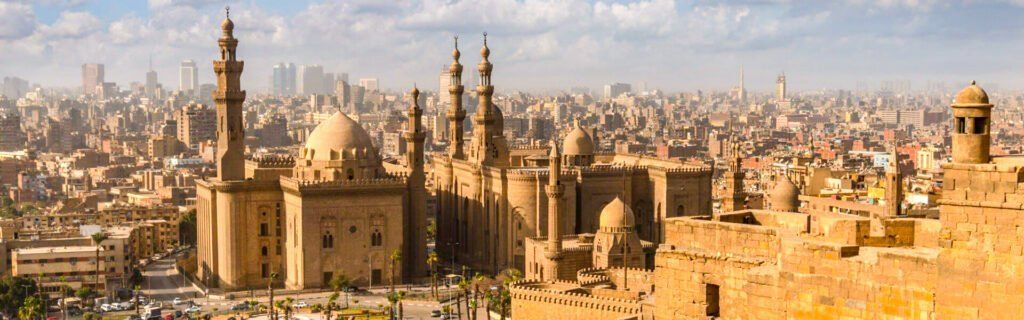
Al-Rifai Mosque: history and royal burials
Al-Rifai Mosque combines a place of prayer with burial chambers associated with Egypt's former ruling family. Its position beside Sultan Hassan makes the pair especially useful for understanding how buildings from different periods can share a monumental setting. For ticket categories, access and route planning, use our practical Al-Rifai visitor guide.
From shrine to royal commission
According to the Ministry of Tourism and Antiquities, the site previously held a Fatimid mosque and later the shrine of Ali Abu Sheibak. Hoshiyar Hanim, mother of Khedive Ismail, commissioned the present design under architect Hussein Pasha Fahmi. The project included a mausoleum for the Muhammad Ali family; construction was interrupted before completion in 1912.
Who does the name refer to?
The ministry links the name to Ali Abu Sheibak and to the Rifa'i Sufi tradition. Ahmad al-Rifa'i, the order's founder, was not buried in this mosque. Keeping that distinction clear helps avoid interpreting every reference to 'Al-Rifai' as the name of a person buried here.
The royal burial chambers
The monument includes tombs of Khedive Ismail, Hoshiyar Hanim, Kings Fuad I and Farouk, and Muhammad Reza Pahlavi, the last Shah of Iran. These burials connect the building with modern royal history as well as religious heritage.
When reading about the mosque, distinguish the history of a burial from present-day visitor access to its chamber. A historical list does not guarantee that every room will be open when you arrive.
Read the neighboring buildings together
The ministry places Sultan Hassan in the fourteenth century and Al-Rifai's present building in a much later period. Looking at them together is therefore more informative than assuming that similar scale means a shared construction date. Compare their entrances and decorative treatment, then ask your guide to explain which features belong to each building.
This article concentrates on that historical context. To arrange the visit, return to the Al-Rifai practical guide or explore the Cairo attractions collection.
Frequently asked questions
Was Ahmad al-Rifa'i buried here?
No. The ministry's account distinguishes him from the shrine associated with Ali Abu Sheibak.
Were Al-Rifai and Sultan Hassan built together?
No. They are neighboring monuments from different periods, which makes comparing them part of the interest of a visit.
Where should I check practical visiting details?
Use our linked practical guide and the ministry's monument page for ticket categories and current visiting information.