

Tour Details
Ten days is the most requested trip length for first-time visitors to Egypt — long enough to cover the Giza Pyramids, a full Nile cruise between Luxor and Aswan, and a day trip to Abu Simbel, without needing two weeks off work. This itinerary follows the same route used by most licensed Egyptian tour operators: three nights in Cairo, three nights sailing the Nile, a night in Aswan for the Abu Simbel excursion, and two nights in Cairo on return, before departure. Below is the full day-by-day plan, followed by how this compares to shorter and longer trips, who it suits best, and answers to the questions travelers ask most before booking.
Who This Itinerary Suits
This is the right length for first-time visitors who want the complete "must-see" list — pyramids, a Nile cruise, and Abu Simbel — in a single trip, without needing two full weeks away from work. It also suits travelers who want daylight time at each site rather than a checklist tour, but aren't looking to add extensions like Alexandria or the Red Sea just yet — those work better as a reason to come back.
Planning Notes
- Best time to travel: October through April, when daytime temperatures in Luxor and Aswan stay comfortable for sightseeing.
- Domestic flights: Cairo–Luxor and Aswan–Cairo are both roughly one-hour flights and are included in most packaged versions of this itinerary.
- Nile cruise standard: A 3-night, full-board cruise between Luxor and Aswan is the standard pairing for this itinerary length; 5-star and dahabiya (small sailboat) options are both available depending on budget and preference.
- Pace: Expect early starts on Days 2, 5, and 8 — these cover the sites best visited before the heat and the crowds arrive.
Price Include
- 5-nights hotel accommodation + breakfast in Cairo
- 3-nights Nile cruise accommodation
- 1-night hotel accommodation + breakfast in Aswan
- 2-day tours – sightseeing in Cairo
- 3-day tours – sightseeing in Luxor
- 3-day tours – sightseeing in Aswan
- Domestic flights – Cairo / Luxor & Aswan / Cairo
- Expert tour guide
- Transfer vehicles with air conditioning
- Entrance fees to all the mentioned sites in our itinerary
- All service charges & taxes.
Price Excludes
- Entry visa into Egypt - We can assist you with obtaining your visa upon arrival
- Any extras not mentioned in our itinerary
- Any Tips given throughout the tour
- Optional tours.
Day-by-day Itinerary
Day 1 - Arrival
Landing in Cairo for the first time is disorienting in the best way — the airport gives way almost immediately to a sprawling, sand-colored city of over 20 million people. A private driver will be waiting with a name sign at arrivals, so there's no need to navigate taxis or public transport on your first night. The drive to your hotel takes 45–75 minutes depending on traffic and where you're staying (Downtown, Zamalek, or near the Pyramids in Giza). Most flights land in the afternoon or evening, so plan for a quiet first night: check in, get dinner nearby, and rest. Tomorrow starts early.
Overnight in Cairo.
Meals: No Meals
Day 2 - Cairo – Great Pyramids, Egyptian Museum, Memphis & Dahshur
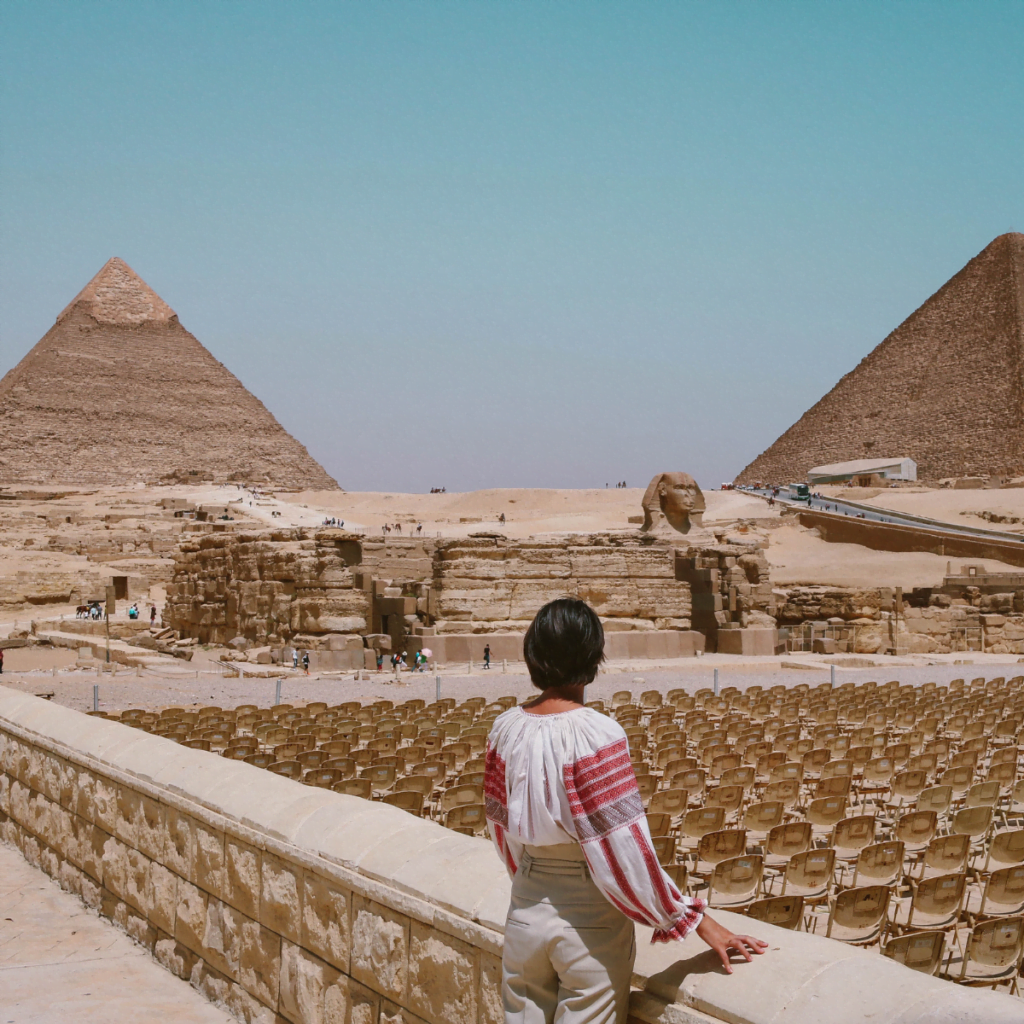
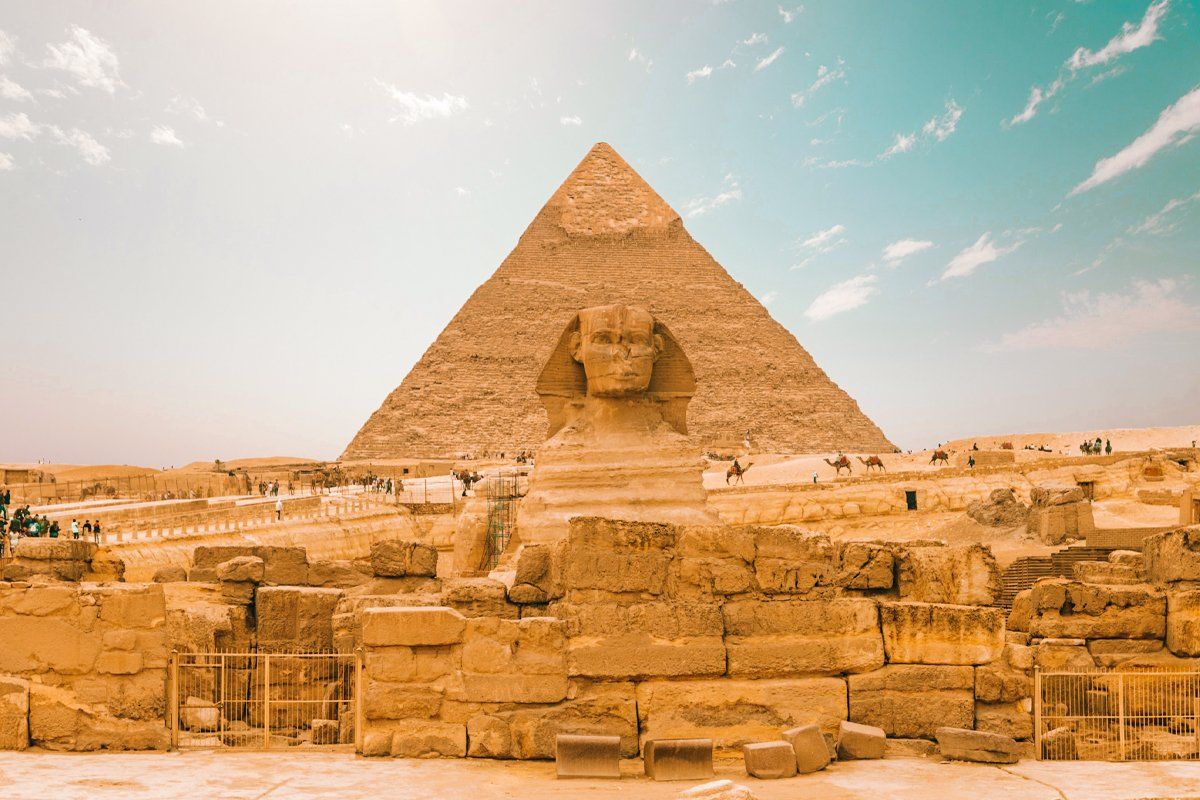
This is the day people picture when they imagine Egypt. Arrive at the Giza Plateau by 08:00, before the heat and the tour buses build up, to see the Great Pyramid of Khufu, the Pyramid of Khafre, and the smaller Pyramid of Menkaure standing in a row against the desert. The Sphinx sits just below, facing east toward the rising sun. Guides can arrange an optional camel or horse ride along the plateau's edge for photos with all three pyramids in frame — worth doing for ten minutes even if you're not a fan of animal-back rides generally. After lunch, head to the Egyptian Museum in Tahrir Square (or the newer Grand Egyptian Museum near Giza, which has been absorbing much of the museum's collection — confirm which is showing Tutankhamun's treasures at time of travel). Either way, this is where the gold mask, the royal mummies, and thousands of artifacts pulled straight from the tombs you'll visit later in the trip are kept.
Continuing the journey, visit the ancient capital of Memphis, where you can witness the remarkable statue of Ramses II. Conclude the day's adventures in Dahshur, where you'll have the chance to marvel at both the Red Pyramid and the Bent Pyramid.
After a fulfilling day, enjoy a comfortable transfer back to your hotel in Cairo for another overnight stay.
Overnight in Cairo.
Meals: Breakfast and Lunch
Day 3 - Memphis, Saqqara & Khan El Khalili
A quieter, less crowded day than Day 2, and for many travelers, more atmospheric. Memphis was Egypt's capital for over 3,000 years, though little remains above ground beyond a fallen colossus of Ramses II and a small open-air museum. Saqqara, ten minutes away, is where step pyramids were invented — the Step Pyramid of Djoser predates the Great Pyramid by roughly a century and still dominates the necropolis. With far fewer visitors than Giza, it's possible to walk the surrounding tombs at your own pace. Spend the afternoon at Khan El Khalili, Cairo's centuries-old bazaar, for spices, textiles, and a coffee at a café frequented by Cairo's writers for generations — a good last stop before flying south the next morning.
Overnight in Cairo.
Meals: Breakfast and Lunch
Day 4 - Luxor East Bank
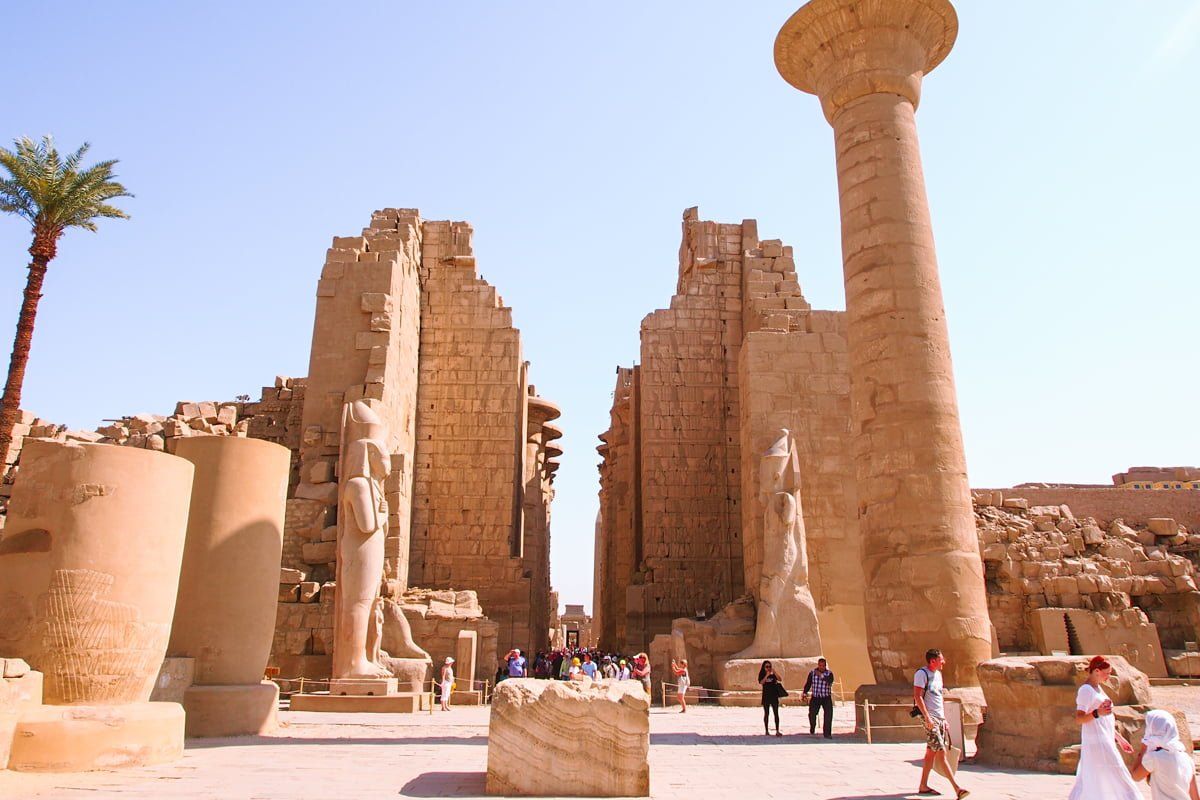
A short domestic flight (around one hour) takes you from Cairo to Luxor, ancient Thebes, capital of Egypt during the height of the New Kingdom. After checking in to your Nile cruise boat, the afternoon is dedicated to Luxor's East Bank, where the living city and its temples always stood — as opposed to the West Bank, reserved for the dead. Karnak Temple is the main event: not a single building but an entire complex built up over 2,000 years, its Hypostyle Hall alone holding 134 towering stone columns. Time the visit to end near Luxor Temple as the sun sets, when its columns are lit and the crowds thin out for the evening.
Overnight on the cruise.
Meals: Breakfast and Lunch
Day 5 - Luxor West Bank
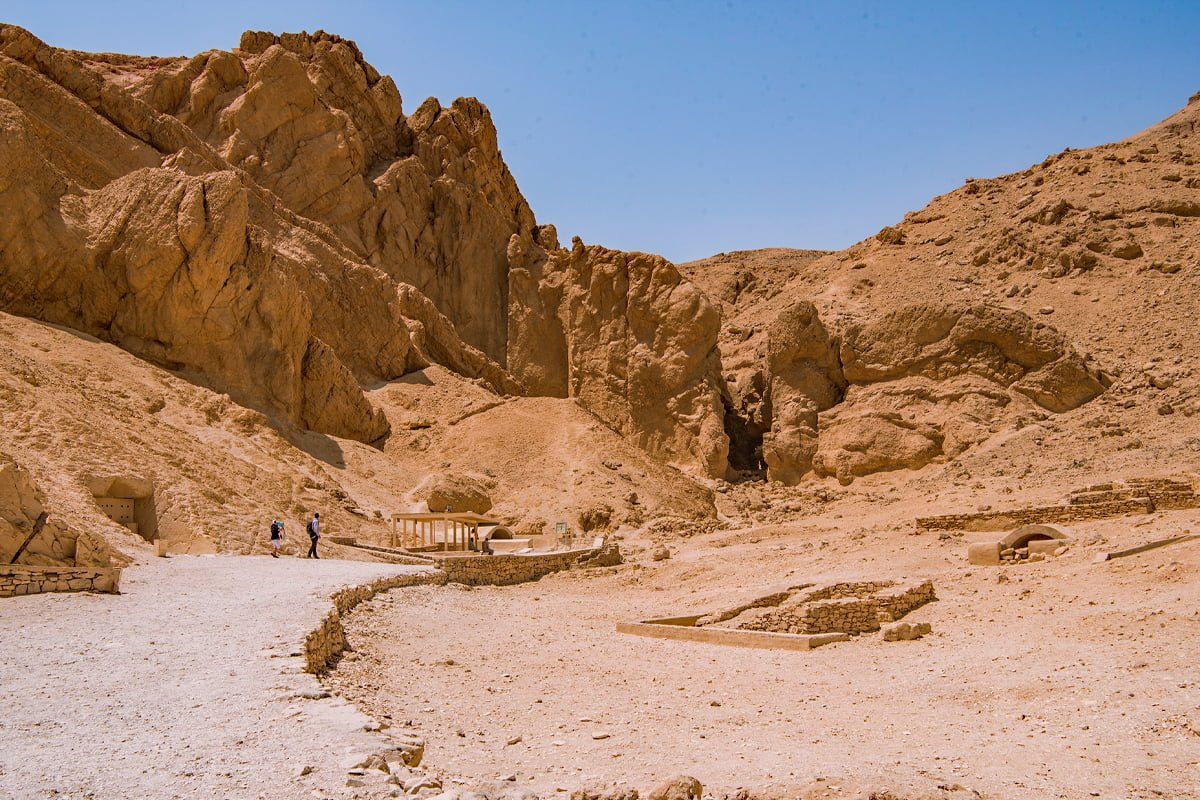
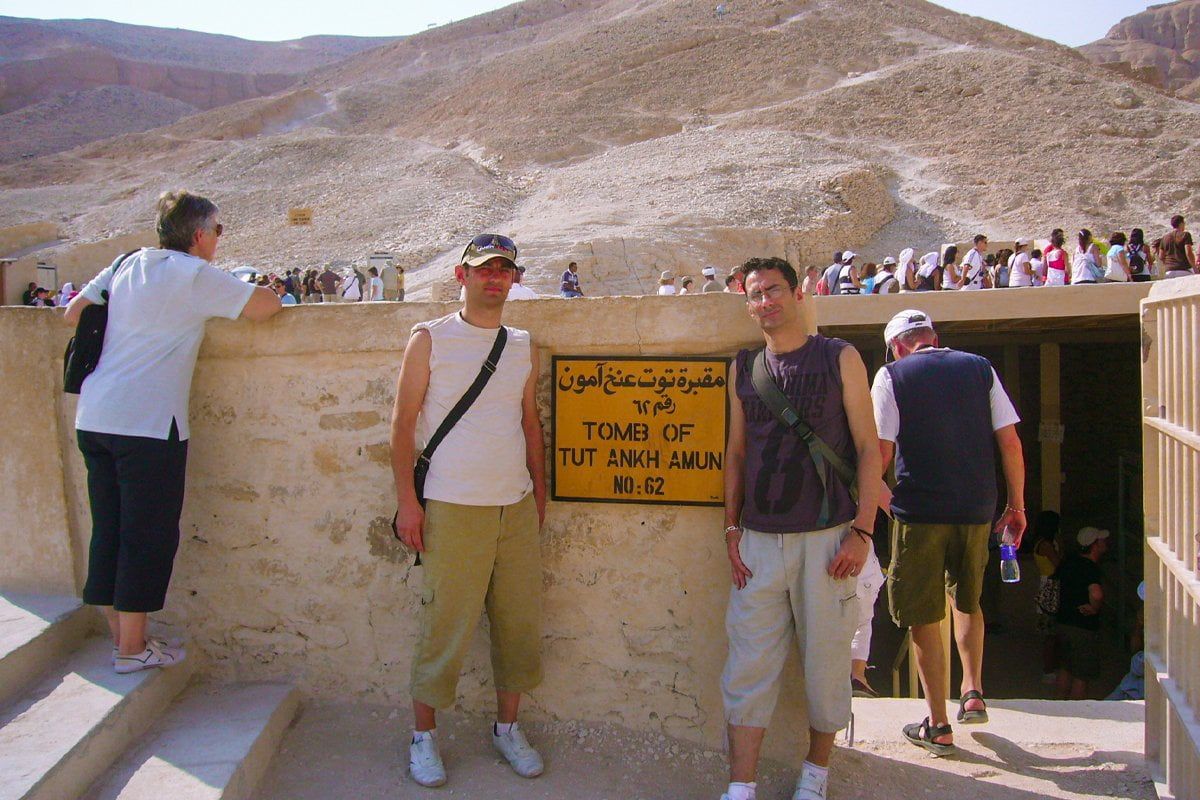
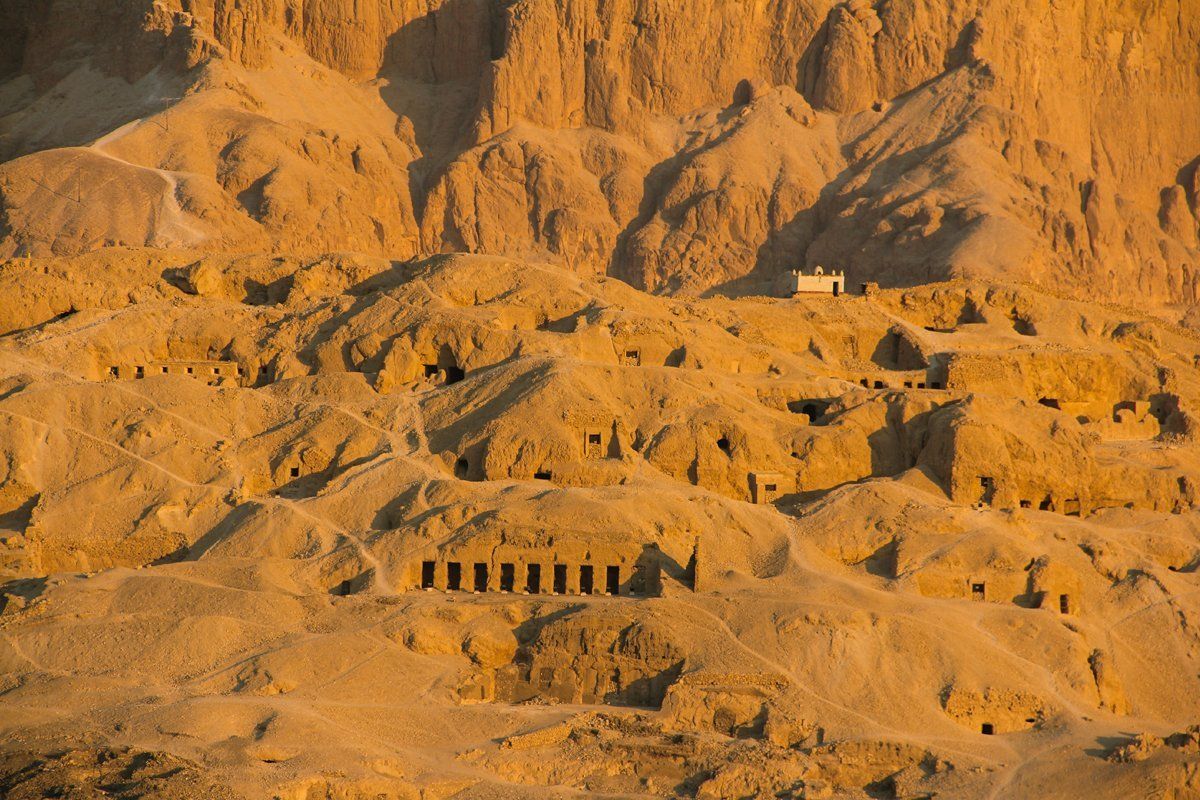
An early start (08:00) crosses the Nile to the West Bank, where the New Kingdom's pharaohs carved their tombs deep into the desert cliffs rather than building pyramids, hoping to avoid tomb robbers. The Valley of the Kings holds over 60 known tombs, including Tutankhamun's — tickets typically allow entry to three tombs, so a guide's recommendation on which to prioritize matters. Hatshepsut's mortuary temple, built into the cliff face at Deir el-Bahari, remains one of ancient Egypt's most striking pieces of architecture. On the way back, stop at the Colossi of Memnon, two 18-meter statues that have stood alone in a field for over 3,400 years. By early afternoon, return to your Nile cruise boat and settle in as it casts off, sailing south toward Esna.
Overnight on the cruise.
Meals: Breakfast and Lunch
Day 6 - Edfu Temple & Sailing to Kom Ombo
Morning arrival in Edfu, where a horse-drawn carriage takes you from the dock to the Temple of Horus — widely considered the best-preserved temple in Egypt, thanks to centuries spent buried under desert sand and Nile silt before 19th-century excavation uncovered it almost intact. The falcon-headed statues of Horus still guard the entrance. Afternoon is spent sailing toward Kom Ombo, with time on the sun deck to watch riverside villages, water buffalo, and palm groves pass by — this is the pace a Nile cruise is built for.
Overnight on the cruise.
Meals: Breakfast and Lunch
Day 7 - Kom Ombo & Aswan Tour
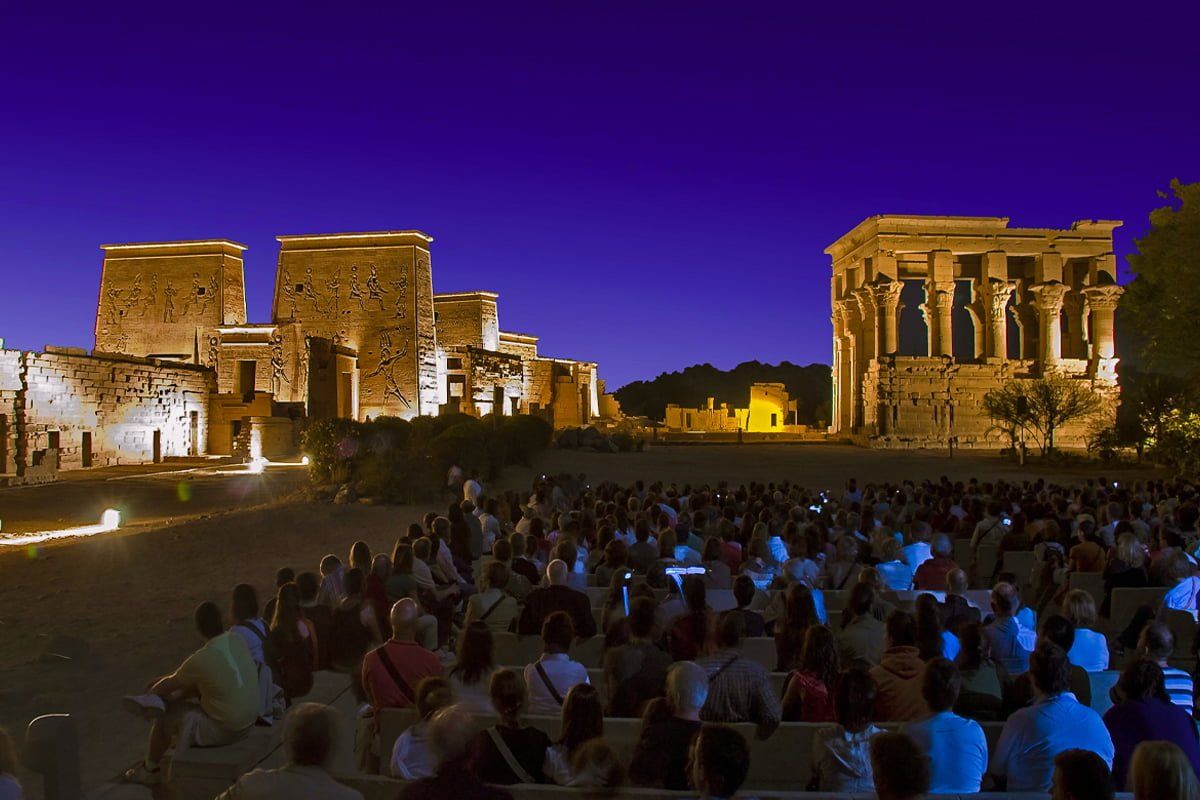
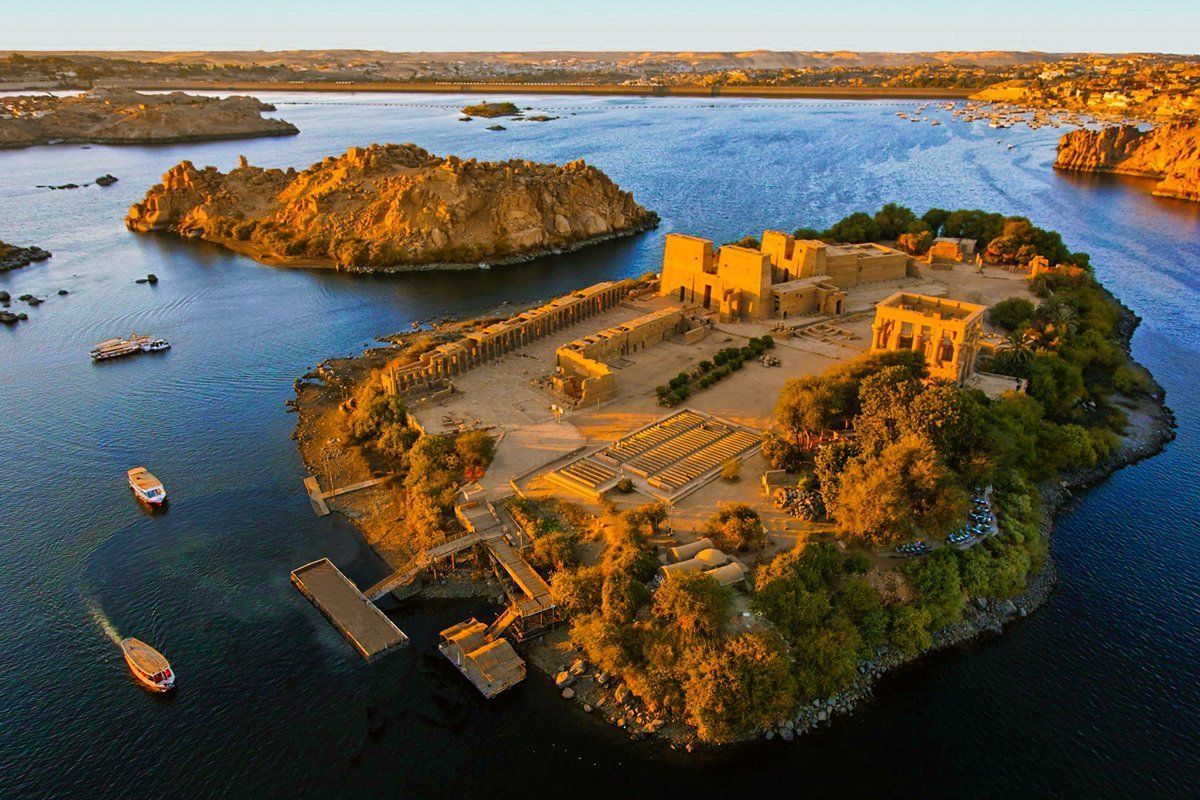
An early visit to Kom Ombo's temple, unique for being a "double temple" split symmetrically down the middle — one half dedicated to the crocodile god Sobek, the other to the falcon god Horus the Elder, each with its own entrance, halls, and sanctuary. The adjoining Crocodile Museum houses several mummified crocodiles found at the site. The boat continues to Aswan by afternoon, Egypt's southernmost major city and historically the gateway to Nubia. Visit the High Dam, completed in 1970 and responsible for both ending the Nile's annual floods and creating Lake Nasser; the elegant, colonnaded Philae Temple, relocated stone-by-stone to Agilkia Island in the 1970s to save it from rising water; and the Unfinished Obelisk, still lying in its quarry, cracked before completion — its abandoned state reveals more about ancient Egyptian stone-cutting techniques than a finished monument ever could.
Overnight in Aswan.
Meals: Breakfast and Lunch
Day 8 - Abu Simbel Tour
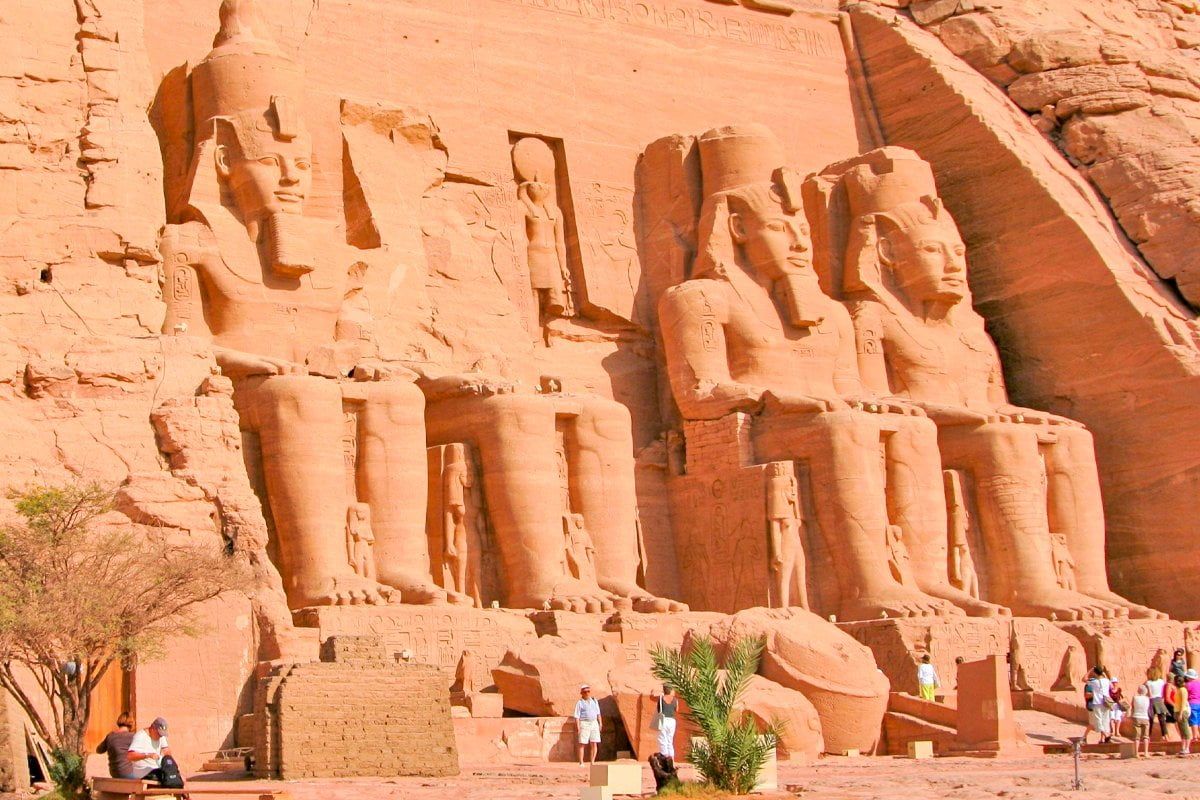
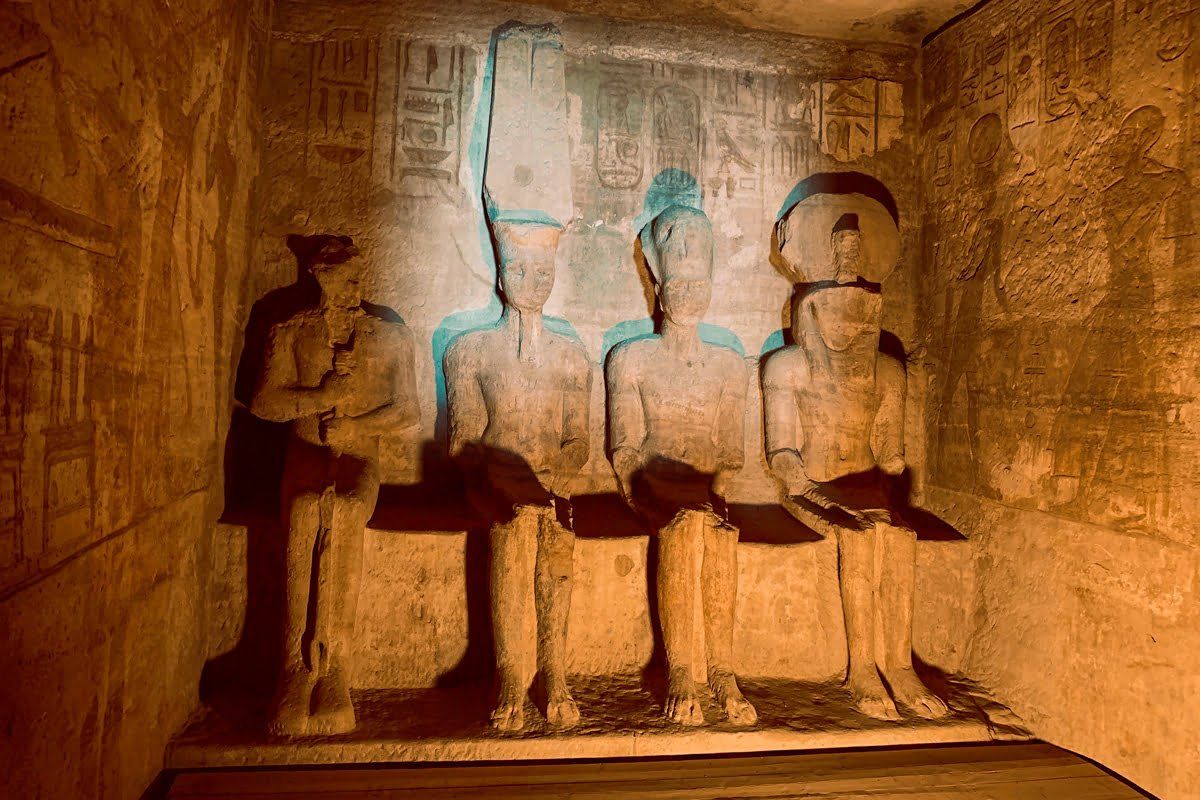
The earliest start of the trip: a 04:00 departure for the roughly three-hour drive (or a short flight) to Abu Simbel, timed to arrive before the tour buses and the midday heat. The Great Temple of Ramses II, fronted by four 20-meter seated colossi of the pharaoh, was carved directly into a mountainside — and, like Philae, was moved in the 1960s in a UNESCO engineering effort to save it from the rising waters of Lake Nasser. The smaller Temple of Hathor, dedicated to Ramses's queen Nefertari, stands beside it. Return to Aswan by late morning and catch an evening flight back to Cairo.
Overnight in Cairo.
Meals: Breakfast and Lunch
Day 9 - Free Day in Cairo (optional Alexandria)
A deliberately open day after eight days of early starts. Sleep in, revisit Khan El Khalili, or take an optional full-day trip to Alexandria (roughly 2.5 hours from Cairo by road) to see the Bibliotheca Alexandrina, the Catacombs of Kom El Shoqafa, and Qaitbay Citadel, built on the site of the ancient Lighthouse of Alexandria. Return to Cairo for a final dinner.
Overnight in Cairo.
Meals: Breakfast and Lunch
Day 10 - Departure
Private transfer to Cairo International Airport for your international flight home, timed around your specific departure — most operators recommend arriving three hours before an international flight.
Meals: Breakfast
Things to Know About Our Pricing Policy
Prices are in US dollars per person, and you receive a confirmation voucher by email within 24 hours of booking. Payment terms, cancellation fees and children’s rates are set out in full on our Booking Policies & FAQ page.
Things to bring with you
- A valid Passport for 6 months
- Sunblock & Sunglasses
- Sanitizer gel & Water holder
- Warm clothes in winter
- Cotton clothes in summer
- Camera & Umbrella
- A Hat & Comfortable shoes
Tour FAQ
Are domestic flights included in this 10-day tour?
Yes, domestic flights from Cairo to Luxor and from Aswan back to Cairo are included.
Answers to common questions about refunds, changing your travel date, visas, payment and gratuities are on our Booking Policies & FAQ page.