
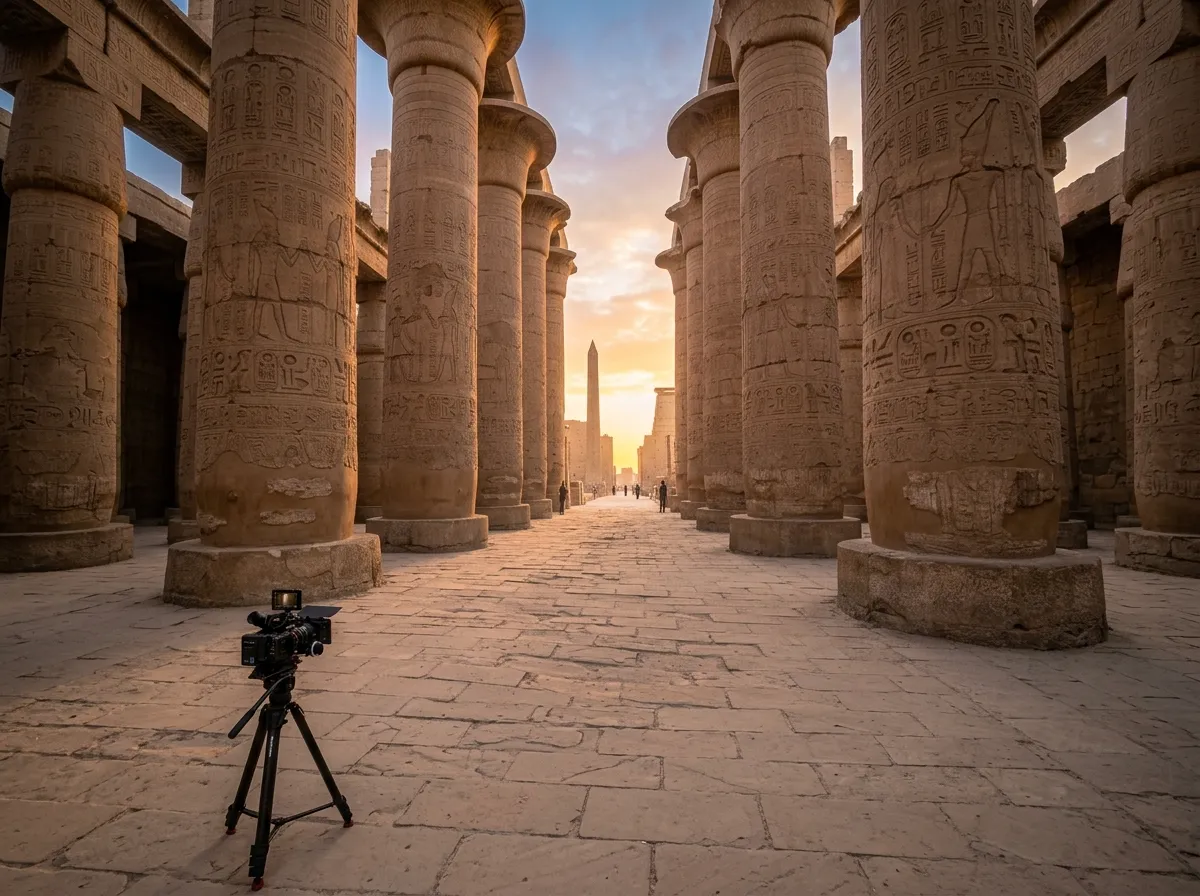
 If you’re planning luxor tours egypt, you’ll find a tapestry of monumental temples, river journeys, and museum encounters that connect ancient wonders with modern travel comforts. This guide weaves practical planning tips with historical threads drawn from scholarly sources, helping you pace visits to Karnak and Luxor, choose between river and air itineraries, and book with confidence.
Historical threads behind Luxor's enduring appeal
Two obelisks stand as enduring symbols of Luxor’s historical magnetism. The obelisk of Ramesses II, now in Paris, was paired with another that still stands outside the Temple of Luxor, a pairing that hints at a broader story of transport, exchange, and western fascination with Egypt. This tale, captured in scholarly accounts, shows how treasures were moved and reinterpreted far from their original homes, fueling a century of rediscovery that drew travelers and artists to Alexandria and Luxor alike (d'Alton, 1993). Beyond the monuments, the tradition of inscriptions—text and marginal marks on obelisks and temple walls—shaped how visitors read the landscape. Ramesses II’s era introduced marginal inscriptions to obelisks, a practice that complemented the central hieroglyphic columns and occasionally echoed earlier and later inscriptions. These textual layers helped modern visitors imagine how ancient rulers claimed space for kingship and devotion, a process still visible in surviving inscriptions today (Veils, Votives, and Marginalia, pp. 55).Luxor’s modern heritage: museums, education, and public dialogue
Luxor’s ancient wealth has not just lived in stone; it has inspired modern programs designed to connect local communities with their past. The Luxor Museum of Ancient Egyptian Art, in particular, has been the site of an educational project that fosters regular seminars and discussions among townspeople. The aim is to create a dialog between residents and the discoveries unearthed by Egyptian and international archaeologists, helping the public understand and engage with the civilization that surrounds them. The project also addresses contemporary debates on heritage and stewardship, offering a model for inclusive interpretation of antiquities (The Luxor Museum of Ancient Egyptian Art: The Challenge of Abundance, Rachel, pp. 3-4). For travelers, Luxor’s modern cultural landscape is enriched by academic and fieldwork perspectives that circulate through tours and museums alike. As a guide to practice, consider how such programs translate into memorable experiences: seeing artifacts in their regional context, meeting local scholars, and understanding how modern Luxor preserves and presents its past to guests from around the world. The Luxor Museum’s approach illustrates a broader responsibility: turning visitor curiosity into informed appreciation rather than passive viewing (The Luxor Museum of Ancient Egyptian Art: The Challenge of Abundance, Rachel, pp. 3-4).
A stroll through travel routes: from Nile spirits to contemporary itineraries
Travel narratives tied to Luxor stretch back to early Nile journeys and the long arc of exploration along the river. In one influential account, the Nile Valley’s southern reach—from Luxor to the cataracts—was surveyed in seasons that accompanied scholars, divers, and travelers as they traced the region’s stratified landscapes. Such reports remind modern travelers that the river has long served as a corridor of discovery, a consideration when choosing among Luxor tours egypt options that combine river experiences with temple visits. A classic perspective on the river’s exploration shows how Nile travel was integrated into broader journeys, including sections describing Aswan, Akhmim, and other ancient sites (By Nile and Tigris, Budge, pp. 97-99). For those who prefer a cruise experience to long on-shore days, Nile-based itineraries provide a different rhythm: mornings amid temple complexes, afternoons on a deck with the river’s current in view, and evenings in ports with a backdrop of starlit deserts. Such ideas echo longstanding travel patterns that linked Luxor’s temples with a leisurely river pace, a pattern still popular among luxor tours egypt seekers today (By Nile and Tigris, Budge, pp. 97-99).Practical planning for Luxor visits
Travel planning for Luxor should blend timing, access, and pace. Visitors often ask about the best season to visit, timing for temple openings, and how to negotiate entry to sites with large volumes of travelers. While the historical sources illuminate why Luxor’s monuments matter, practical planning comes from understanding how to move between sites, how to secure tickets, and how to dress for the climate. In general, plan to wear comfortable walking shoes and sun protection, stay hydrated, and allow time for both the big temple complexes and secondary sites such as smaller shrines or fringe ruins that may be less crowded. For those who value a curated schedule, guided tours that integrate temple precincts with museum stops can balance chronological pacing with meaningful context (The Luxor Museum of Ancient Egyptian Art: The Challenge of Abundance, Rachel, pp. 3-4). When you’re ready to book, consider packages that align with your preferred rhythm: a Nile-cruise experience to slow the pace between Karnak and Luxor temples, or a multi-city fly-and-tour that stitches Cairo, Luxor, and Aswan into a single itinerary. Our site offers several choices that match different travelers’ needs. For instance, you can explore Your Ultimate Guide to Luxor Egypt Tours!, or delve into a broader array of options at Top Luxor Egypt Tours for Every Traveler. If a river-based rhythm appeals, consider the M/S Nile Style Nile Cruise or Jaz Nile Monarch cruise for a seamless Luxor experience along the Nile (tour pages: M/S Nile Style Nile Cruise and Jaz Nile Monarch cruise).Structured options: a quick glance at popular Luxor itineraries
Below is a concise comparison of three representative Luxor tours egypt experiences, highlighting duration and focus. This snapshot helps you choose a pace that suits you, whether you prefer temple immersion, river time, or a balanced mix.| Tour type | Duration | Highlights |
|---|---|---|
| M/S Nile Style Nile Cruise | 4-7 nights | Karnak and Luxor temples, Nile scenery, on-board culture |
| 5 Days Cairo & Luxor by Air | 5 days | Air transfers, Giza pyramids, Luxor temples, Karnak complex |
| 12 Days Cairo & Nile Cruise by Flight | 12 days | City sites, Nile cruise segments, multiple temples and museums |